
Heat Pumps: What You Need to Know
A plain-language guide for Canadian homeowners: before, during and after a heat pump installation.
The short version
1. Seal and insulate first. A draft-free, well insulated home needs a smaller, less expensive heat pump and stays more comfortable.
2. Insist on proper sizing. Ask for a heat loss calculation (CSA F280). Bigger is not better.
3. Check your electrical panel and ducts before you sign. Upgrades can add thousands to the cost.
4. Get it set up and tested properly. A good installation is as important as a good heat pump.
LEARN. ASSESS. VERIFY.
Planning a heat pump upgrade?
1 – How a Heat Pump Works
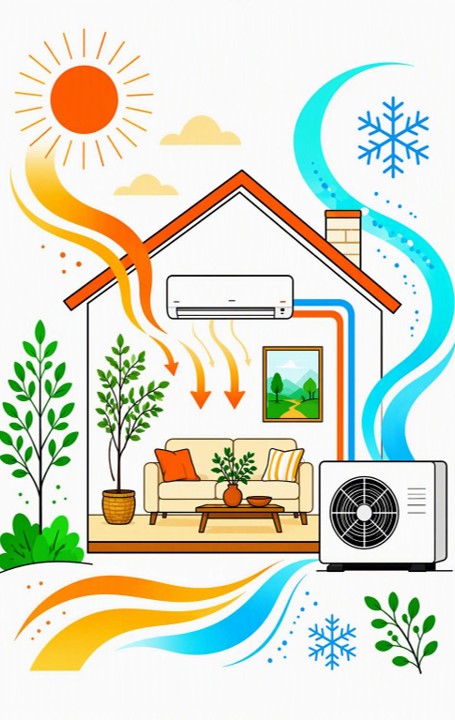
A heat pump moves heat instead of making it. In winter it pulls heat from the outdoor air, even when it is very cold, and brings it inside. In summer it runs in reverse and works like an air conditioner. One system heats and cools your home.
Because it moves heat rather than burning fuel, a heat pump can deliver 2 to 4 units of heat for every unit of electricity it uses. That is why it can lower your energy bills, especially if you heat with oil, propane or electric baseboards.
How is it different from a furnace and air conditioner?
|
Furnace and air conditioner |
Heat pump |
|
|
Heating |
Burns gas, oil or propane to create heat |
Moves heat from outside into your home, burning no fuel |
|
Cooling |
Needs a separate air conditioner |
Built in: the same unit cools your home in summer |
|
Equipment |
Two systems to buy and maintain |
One system for year-round comfort |
|
Comfort |
Short bursts of hot air, then off |
Most modern models run longer at lower speed for steadier, more even temperatures |
Common types
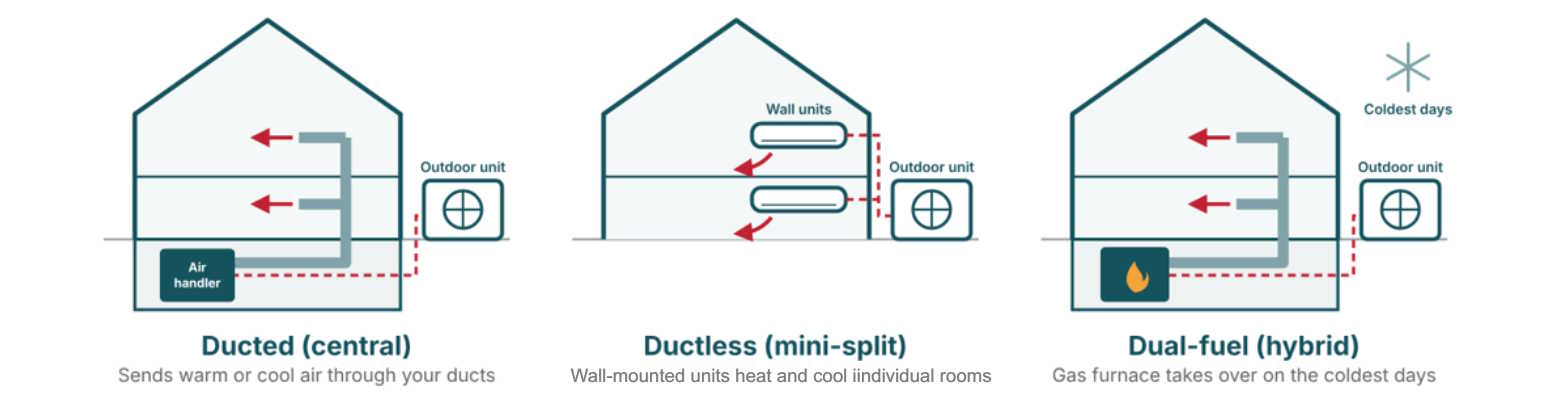
Ducted suits homes that already have ductwork. Ductless suits homes without ducts, additions and hard-to-heat rooms. Dual-fuel suits homes keeping a gas furnace as backup.
Do they work in Canadian winters?
Yes. Modern cold-climate heat pumps keep heating at -25°C or colder. Always check the model’s lowest operating temperature and how much heat it delivers at -15°C and -25°C, not just at mild temperatures.
2 – Is Your Home Ready?
Most heat pump problems come from the house, not the equipment. Check these before you buy them.
|
Check |
Why it matters |
|
Air leaks and insulation |
A leaky home stays drafty and uncomfortable however good the heat pump is. Sealing first means a smaller, cheaper system. |
|
Sizing (CSA F280) |
A heat loss and heat gain calculation (F 280) shows how much heating your home really needs. It should be done by a qualified person who looks at your actual house, not guessed from square footage. |
|
Electrical panel |
Many older homes have 60 or 100 amp service. A heat pump may need a panel or service upgrade, which costs more, may require a permit, and can take weeks to arrange with your utility. |
|
Ductwork |
Heat pumps need more airflow than a furnace. A duct flow test shows whether your ducts are adequate, need small changes, or truly need replacing. Get a second opinion before replacing ducts. |
|
Thermostat |
Many standard thermostats do not run heat pumps properly. You may need a compatible one. |
Bigger is NOT better
An oversized heat pump turns on and off too often. It wastes energy, wears out sooner, and can leave your home humid. An undersized one leans on expensive backup heat. Ask every contractor: “Will you do a CSA F280 heat loss calculation and show me the results?” If the answer is no, that is a red flag.
Consider an Energy Advisor
A registered Energy Advisor is independent: they do not sell equipment. They can assess your home, tell you what to fix first, help with sizing, and recommend reputable installers. This is especially helpful if you are planning other upgrades such as insulation, windows or a renovation.
3 – Heating Broke Down? You Can Still Get It Right
Most heating systems are replaced in a hurry, after a breakdown. Even then, an Energy Advisor can help, often within a day or two, without slowing down your installation or your rebate.
- Check the quote. An Energy Advisor can review the size and model you have been offered, often remotely, and flag a unit that is too big or not built for cold weather.
- Size it quickly. If your home has had an EnerGuide evaluation, they can often check the sizing (CSA F280) from that report. If not, a short visit can usually be done within a day or two.
- Test before you replace ducts. A quick duct test can save you from paying for new ductwork you do not need.
- Catch safety issues, such as a gas water heater that may not vent properly once the furnace is removed.
- Buy time if you need it. Ask about temporary heat or a short-term repair so you can choose the right heat pump, not just the one available today.
- After installation, an Energy Advisor can help homeowners review the completed installation and identify any questions that may need to be discussed with the installer.
Tip
Find an Energy Advisor before your system fails, so you know who to call. Many of CACEA’s members can provide an F280 calculation and do a duct flow test in addition to audit services.
Find an Energy Advisor
4 – Choosing the Right Heat Pump
The ratings, in plain language
|
Rating |
What it tells you |
Tip |
|
SEER2 |
Cooling efficiency, like fuel economy for summer |
Higher is better |
|
HSPF2 |
Heating efficiency over a season |
Higher is better; compare between quotes |
|
COP |
Heat delivered per unit of electricity |
A COP of 3 means 3 times the heat for the power used |
|
BTU / tons |
How much heating or cooling the unit can deliver |
Should match your F280 calculation, not just your house size |
5 – Hiring a Contractor
A heat pump is a large investment you rely on for 15 to 20 years. Take time to find the right installer.
Questions to ask a contractor
|
Topic |
Ask |
|
Sizing |
Will you do a CSA F280 calculation? Can I see it? Why this size and not smaller or larger? |
|
Ducts and electrical |
Will you test my ductwork? Will my electrical panel need an upgrade, and is that included the price? |
|
Equipment |
Which model, and why? What is its output at -25°C? Did you verify it is rebate-eligible? |
|
Installation |
Who will do the work? Will you get all the permits if required? How will the old refrigerant be recovered? |
|
Testing |
Will you test airflow, temperatures and refrigerant charge after the installation, and show me how to use the controls? |
|
Price and warranty |
Is the price fixed? What is NOT included? What is your workmanship warranty, separate from the manufacturer’s? |
Do I need a permit?
It depends on where you live, as rules are set by your province and city. An electrical permit is almost always needed for the new circuit or a panel upgrade, and the licensed electrician will take care of getting it. A gas permit may be needed if a gas furnace or boiler is removed or disconnected. Some cities also require a building or HVAC permit, others do not. Ask your contractor which permits they will acquire and be cautious if they say none are needed.
6 – Red Flags and Scams
Walk away if you hear or see any of these
|
Scam |
How to protect yourself |
|
Bait and switch: quoting a high-efficiency model, installing a cheaper one |
Put the exact model numbers in the contract and check the labels when the equipment arrives. |
|
Oversizing for profit: bigger units cost more |
Ask for the F280 calculation and compare it with the size quoted. |
|
Rebate tricks: false eligibility claims or inflated invoices |
Check eligibility yourself on the official program website. |
|
Financing on your home title: some rental or financing plans register against your property |
Ask: “Will this register on my title?” before signing. |
7 – Set It and Leave It
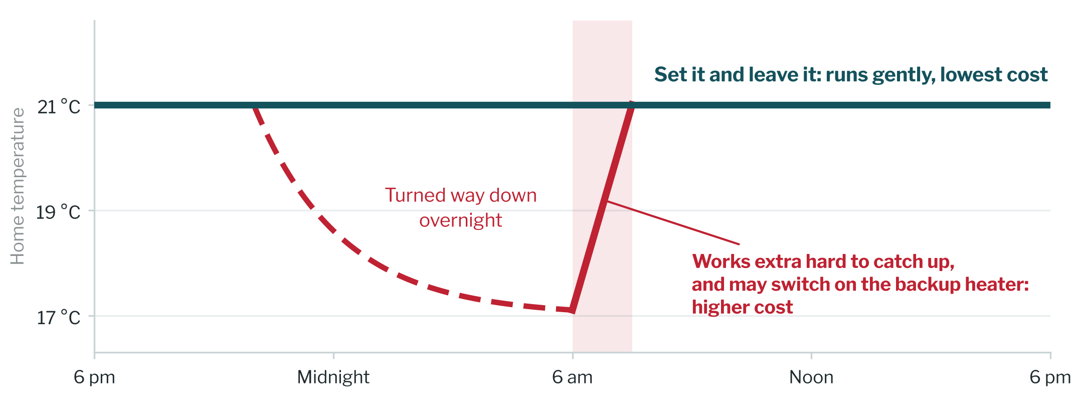
Your set point is the temperature you choose on your thermostat. A heat pump works best running gently and steadily, like a car on cruise control.
New to a heat pump? It works differently from a furnace.
- Gentler heat: a furnace blows hot air in short bursts. A heat pump sends warm, not hot, air steadily. That’s normal.
- Longer run times: it may run for long periods, especially on cold days. That’s how it stays steady.
- New habits: turning the heat down at night saved money with a furnace. With a heat pump, it usually costs more.
Steady Beats Up and Down
Quick Settings
|
Setting |
Why |
|
|
Winter |
20–21 °C, then leave it |
Steady heat keeps the heat pump efficient |
|
Summer |
About 24 °C |
Comfortable without overworking it |
|
Mode |
“Heat” in winter, “Cool” in summer |
“Auto” can switch back and forth and waste energy |
|
Fan |
“Auto” |
Running the fan all the time lowers efficiency |
|
Backup heat |
2–3 °C lower than the heat pump |
The backup only comes on when it’s really needed |
|
Wall-mounted units |
About 1 °C higher than usual |
They measure the temperature near the ceiling |
DO
- Pick a temperature and leave it, day and night
- Make small changes only (1–2 °C)
- Keep vents clear and doors open
AVOID
- Big drops at night or when you’re out
- Turning it way up: it won’t heat any faster
- “Auto” mode, which switches between heat and cool
How this saves you money
A heat pump can be up to three times more efficient than electric baseboard heaters. A steady temperature lets it stay at that efficiency and avoids the backup heater, which is much more expensive to run.
Who sets it?
You do, using your thermostat, remote or app. Your heat pump installer sets up the system’s other settings, like when the backup heater turns on, so ask your installer about those.
8 – Costs and Rebates
The quoted price is often not the full cost. Ask what is not included, and budget for items like these (typical ranges; prices vary by region and home):
|
Possible extra cost |
Typical range |
When it applies |
|
Electrical panel or service upgrade |
$2,500 – $5,500+ |
Common in older homes |
|
New circuit for the outdoor unit |
$300 – $800 |
Almost always |
|
Duct changes or sealing |
$500 – $6,000 |
When airflow is not enough |
|
Heat pump-compatible thermostat |
$200 – $500 |
If yours is not compatible |
|
Pad or wall bracket for outdoor unit |
$300 – $600 |
Most installations |
|
Permits |
$100 – $500 each |
Depends on your city and province/territory |
About rebates
The federal National Heat Pump Rebate (announced October 2026) offers up to $10,000 for eligible below-median-income households and $2,000 for other eligible households and can be combined with provincial/territorial programs. Check the official program website for current rules.
Most rebates are paid after the work is done, so plan to pay the full cost up front.
9 – After Installation and Upkeep
Before the installer leaves
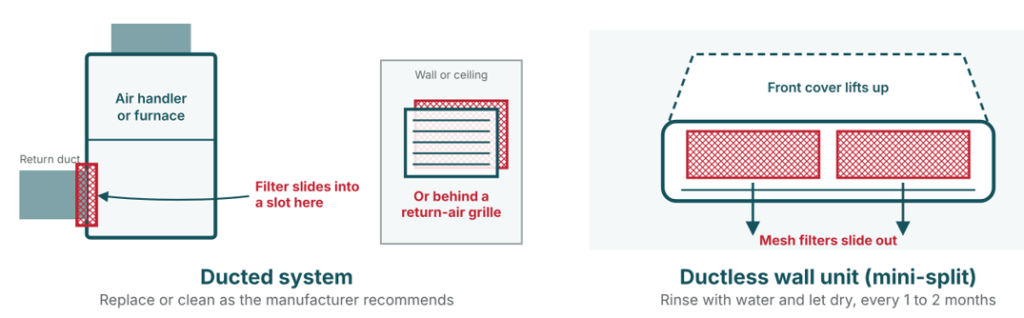
Keeping it running well
Keeping a gas furnace or boiler as backup?
Keep a working carbon monoxide alarm on every floor and test it monthly. If it sounds, leave the home and call 911 from outside.
Helpful Resources
- nrcan.gc.ca and cacea.ca: find a registered Energy Advisor and federal program information
- neep.org: check a model is rated for cold climates
- hrai.ca: find an HVAC contractor
- Provincial safety authority (e.g. tssa.org): check licenses.
- City website: check permits
We’re Here to Help
Want to Learn More?
Need Help Finding a Qualified EA?
CACEA™’s directory connects you with reliable, NRCan-registered EAs near you.
Want to better understand the importance of building science or the House-as-a-System?
Have questions about common terms used during your home assessment?
Questions? Contact info@cacea.ca